World First: Babies Screened for Blindness Using Artificial Intelligence
PR Newswire
NEW YORK, May 14, 2026
Groundbreaking artificial intelligence screens premature babies in Mongolia for the leading
cause of childhood blindness globally
NEW YORK, May 14, 2026 /PRNewswire/ — For the first time, artificial intelligence (AI) is accelerating the detection of blinding eye disease in premature infants in low- and middle-income countries. In Ulaanbaatar, Mongolia, eye care nonprofit Orbis International and partner company Siloam Vision have become the first in the world to use assistive AI to support clinicians to screen infants for retinopathy of prematurity—the leading cause of childhood blindness worldwide—bringing faster, more reliable screenings to settings where specialist care is scarce and time is critical.
Launched in 2023, the strategic partnership between Orbis and Siloam Vision pairs innovative, proprietary AI technology with Orbis’s health systems-strengthening model and long-term partnerships in local communities to extend high-quality eye care to premature infants in some of the world’s hardest-to-reach areas. Siloam’s AI for retinopathy of prematurity is the first AI system to receive breakthrough status by the U.S. Food and Drug Administration.
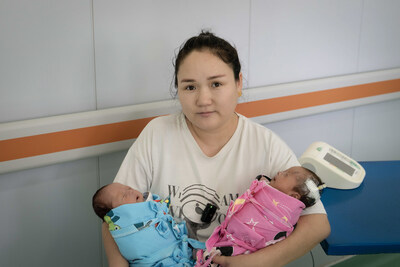
The screening took place at Orbis’s partner hospital, the National Center for Maternal and Child Health (NCMCH) neonatal intensive care unit in Ulaanbaatar, Mongolia’s capital. Among the first babies screened for retinopathy of prematurity using AI were boy and girl twins, Ariunbaatar and Ariunnandin. Their mother, Otgonchimeg, said she was deeply worried when they were born prematurely, knowing that retinopathy of prematurity can progress quickly and cause blindness if it is not detected and treated in time. On this historic day, her twins were screened alongside several other premature babies at the hospital.
“Seeing the first babies screened in a Mongolian clinic is incredibly inspiring,” said Dr. Chimgee Chuluunkhuu, Orbis Mongolia Country Director. “With the country’s vast geography and low population density, Mongolia has both the greatest need and the greatest opportunity to use telemedicine and AI to support doctors in even the most rural areas. This program helps ensure that babies everywhere, not just in the capital, have access to early, life-changing care.”
“This is an historic moment for eye care around the world,” said Karyn Jonas, CDO of Siloam Vision. “By harnessing AI through Siloam’s telemedicine platform, we can train doctors across the country, support their diagnoses, and reach babies who might otherwise go undiagnosed.”
The screening was conducted as part of a hands-on training session with local ophthalmologists and marked the launch of the new program. The program is delivered through Siloam Vision’s proprietary telemedicine platform, iTelegen, and includes ongoing research at NCMCH. Led by the Orbis Mongolia and NCMCH teams, the program represents another important step in their mission to build a stronger, more resilient eye care system that delivers high-quality, sustainable care for all throughout their lifetime, from premature infants to adulthood, in communities across the country.
As part of the initiative, doctors from remote provinces have been trained to use specialized cameras that attach to a cell phone, capturing retinal images that can be reviewed through telemedicine. These images will be sent to NCMCH, where telemedicine tools will help assist ophthalmologists in diagnosing retinopathy of prematurity and other eye conditions. At NCMCH, the AI being implemented is not replacing the specialist but is instead helping to support and provide additional guidance to ophthalmologists in their clinical decision-making.
“On a national and worldwide level, we are collaborating to introduce artificial intelligence in the diagnosis and management of retinopathy of prematurity,” said Dr. Tsengelmaa Chuluunbat, head of pediatric ophthalmology at NCMCH, “We believe this reflects the combined efforts of our dedicated national and international team, which will address the issue of retinopathy of prematurity in Mongolia and contribute to the scientific field of pediatric ophthalmology.”
Otgonchimeg once worked at NCMCH, the same hospital where she later gave birth, so she understood firsthand what was at stake for premature babies and their vision. When she was an employee, the hospital did screen for retinopathy of prematurity, but the process relied on a highly skilled ophthalmologist who often needed days to review images while balancing other patients. Now, the hospital has integrated AI into its screening workflow, enabling results to be reviewed within seconds. With AI-enabled screening, mothers like Otgonchimeg can receive results immediately and move quickly to schedule any needed follow-up care, without losing precious time.
Otgonchimeg said, “As a mother, it was great to hear that they were okay, as there had been concerns that wearing a mask [with oxygen] too much could seriously affect the twins’ vision, to cause blindness.”
Orbis-trained eye care professionals in Mongolia have conducted more than 270 exams on more than 170 newborn babies since the launch of the AI program. Orbis and Siloam Vision are also expanding the program elsewhere in Asia, launching it in Bangladesh, where the first babies are scheduled to be screened in Dhaka this month.
About Retinopathy of Prematurity
All babies born prematurely are at risk of developing retinopathy of prematurity, a condition that damages the retina and can lead to irreversible blindness. Retinopathy of prematurity is entirely preventable; however, a severe lack of trained professionals, equipment, and awareness about the disease in low- to middle-income countries means an estimated 32,000 pre-term babies worldwide become permanently blind or visually impaired from ROP every year. Early detection is key to treating retinopathy of prematurity and saving a baby’s sight.
The landscape of retinopathy of prematurity has drastically changed in the last half-century. As a condition that largely occurs in neonatal units due to overexposure to oxygen, the condition was often isolated to high-resource areas with neonatal units. As neonatal care improves in low- to middle-income countries, premature babies are surviving at greater rates, but are now at high risk of blindness because of limited ophthalmology resources to provide ROP screening.
About Orbis International
Orbis International works around the world to prevent blindness and restore sight for children and adults in places where eye care is out of reach—so vision problems don’t make it harder to learn, earn a living, or enjoy life. Around 1.1 billion people live with vision loss, but with the right care, 90% of it is completely avoidable. That is why Orbis trains doctors, nurses, and other eye care professionals to provide care in their own communities—and works to make sure people of all ages can access the eye exams, glasses, medicine, and surgeries they need to protect and restore their sight. Orbis began this work more than 40 years ago with the Flying Eye Hospital, a teaching hospital on a plane that brings expert training and care where they’re needed most. Today, we also work with local hospitals and clinics across Africa, Asia, and Latin America to make eye care available to more people, and we use and develop technology—like our award-winning Cybersight e-learning and telehealth platform, artificial intelligence screening, and virtual reality training—to help eye care teams treat patients more effectively. Orbis ranks in the top 3% of U.S. charities, having earned top marks for transparency and accountability from Charity Navigator, GuideStar, and the Better Business Bureau. To learn more, please visit orbis.org.
Orbis has worked in Mongolia for more than 35 years alongside local partners, including the Ministry of Health, to strengthen the country’s eye health system by training ophthalmologists and eye care teams, improving clinical services, and expanding access through technology. Building on this long-standing collaboration, Orbis’s current work includes using telemedicine and assistive artificial intelligence to support retinopathy of prematurity screening, helping ensure more babies—wherever they are born—can be identified and treated before vision loss occurs.
About Siloam Vision
Siloam Vision is a company founded to bring to market imaging technologies with potential to reduce preventable blindness around the world. Siloam Vision combines a team with expertise in artificial intelligence, ophthalmic optical design, and global health with a focus on developing integrated solutions to address solvable problems in eye care worldwide, starting with retinopathy of prematurity. To learn more, please visit www.siloamvision.com
MEDIA CONTACT
Jenna Montgomery
Interim Lead, Global Communications and Marketing
jenna.montgomery@orbis.org
Siloam Vision
Karyn Jonas
CDO
karyn@siloamvision.com
 View original content to download multimedia:https://www.prnewswire.com/news-releases/world-first-babies-screened-for-blindness-using-artificial-intelligence-302771687.html
SOURCE Orbis International


