Key Takeaways
- Interactive kiosks are becoming a major part of customer engagement across retail, hospitality, healthcare, restaurants, and public venues.
- Businesses are increasingly using touchscreen kiosks to improve convenience, reduce wait times, and modernize communication.
- Self-service technology can help organizations streamline operations while creating faster and more interactive customer experiences.
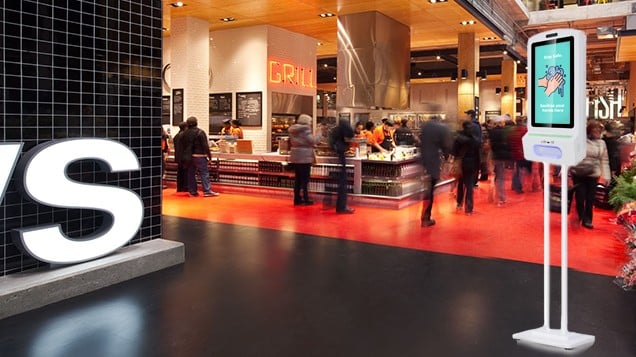
- Digital sanitizer kiosks and tablet kiosk solutions are expanding beyond advertising into navigation, ordering, charging, and visitor communication.
- Many businesses now view interactive kiosk solutions as part of the overall customer experience rather than a standalone display tool.
More than 80% of consumers say they prefer businesses that offer self-service options for simple tasks, according to research from Harvard Business Review. That growing preference is one reason interactive kiosk solutions, touchscreen displays, and digital customer engagement technology are appearing everywhere from hotels and restaurants to healthcare facilities and event venues. Businesses are increasingly looking for ways to improve convenience while keeping communication fast, flexible, and visually engaging inside physical spaces.
Interactive kiosks are no longer limited to basic information stands or ticket machines. Modern touchscreen kiosks now combine advertising, navigation, ordering, device charging, contactless communication, and customer engagement tools within a single system. As customer expectations around speed and convenience continue evolving, many organizations are rethinking how physical spaces communicate with visitors.
What Are Interactive Kiosks?
Interactive kiosks are touchscreen-based digital systems designed to help customers access information, complete transactions, or interact with content independently. Unlike static signage or printed displays, kiosks allow two-way interaction through touchscreens, QR codes, mobile integration, and live digital updates.
Businesses use touchscreen kiosks for a wide range of purposes, including:
- Self-service ordering
- Visitor check-in
- Digital directories
- Interactive advertising
- Product browsing
- Appointment management
- Wayfinding
- Promotional messaging
- Customer surveys
- Device charging stations
Many modern kiosk systems are cloud-connected, allowing businesses to update content remotely across multiple locations. Promotions, announcements, menus, schedules, and advertising campaigns can all be changed in real time without replacing printed materials.
This flexibility is one reason interactive kiosk solutions are becoming increasingly common in high-traffic commercial environments.
Why Businesses Are Investing in Touchscreen Technology
Customer behavior has changed dramatically over the past decade. People are now accustomed to immediate access to information through smartphones, apps, and digital interfaces. That expectation extends into physical environments as well.
Customers increasingly expect businesses to provide faster, more convenient ways to access services without relying entirely on staff assistance. Interactive business displays help meet those expectations by reducing friction during common customer interactions.
For businesses, touchscreen kiosks can also help reduce operational bottlenecks. Self-service systems allow employees to focus on more complex customer needs while routine interactions move through digital platforms.
Restaurants, for example, use tablet kiosk solutions and self-service ordering systems to improve speed and reduce lines during busy hours. Hotels use lobby kiosks for check-ins, event schedules, and visitor information. Healthcare facilities increasingly rely on touchscreen systems for patient registration and navigation assistance.
Even smaller businesses are beginning to adopt digital signage solutions because hardware costs have become more accessible while customer demand for self-service experiences continues growing.
How Interactive Kiosks Improve Customer Engagement
The biggest advantage of touchscreen technology is engagement. Static signage communicates information passively, while interactive kiosks encourage active participation.
That participation naturally increases attention and engagement time.
Interactive customer engagement displays allow visitors to browse information, explore products, search directories, or interact with digital content at their own pace. Instead of simply looking at a screen, customers become part of the experience.
This can improve customer satisfaction because people often prefer having control over how they access information. Self-service options also reduce frustration in busy environments where wait times or limited staffing may create delays.
Smart digital displays can further improve engagement by rotating content dynamically throughout the day. Businesses can personalize promotions, schedules, messaging, or advertisements based on audience behavior, events, or peak traffic hours.
Digital communication also tends to feel more current than static signage. Real-time updates create a stronger sense of responsiveness, especially in fast-moving environments such as airports, hotels, restaurants, convention centers, and healthcare facilities.
Interactive Kiosks Across Different Industries
Touchscreen technology is now being used across a wide range of industries because customer engagement needs vary depending on the environment.
Hospitality
Hotels and resorts increasingly use interactive kiosk solutions for guest check-ins, event schedules, concierge information, and wayfinding. Digital displays can also promote amenities, local attractions, and on-site services.
In tourism-heavy locations such as Florida, hospitality businesses often rely on touchscreen kiosks because information and promotions may change throughout the day based on visitor demand.
Healthcare
Hospitals and clinics use touchscreen kiosks to simplify patient check-in, appointment management, navigation, and visitor communication. These systems can reduce administrative pressure while improving efficiency inside busy medical environments.
Digital sanitizer kiosks have also become more common in healthcare settings where businesses want to combine hygiene-focused solutions with communication and advertising capabilities.
Restaurants
Restaurants increasingly use tablet kiosk solutions for ordering, payment processing, digital menus, and loyalty programs. Self-service systems can improve ordering accuracy while reducing wait times during busy service periods.
Retail
Retail businesses use interactive retail displays and touchscreen kiosks to provide product information, promotions, inventory searches, and customer engagement campaigns.
Interactive displays are especially effective in environments where businesses want to encourage customers to spend more time exploring products or services.
Corporate and Public Spaces
Corporate offices, schools, airports, convention centers, and event venues frequently use lobby digital displays and interactive kiosks for visitor registration, schedules, announcements, navigation, and advertising.
These systems help organizations manage communication more efficiently across large or high-traffic spaces.
The Growing Demand for Self-Service Technology
One major reason interactive kiosks continue growing is the increasing popularity of self-service experiences.
Many consumers now prefer using digital systems for routine tasks because they are faster and more convenient. Ordering food, checking into appointments, searching directories, or accessing event information through a touchscreen often feels more efficient than waiting in line for assistance.
Businesses benefit from this preference because self-service technology can improve operational efficiency while reducing pressure on employees.
The growth of contactless interaction has also accelerated interest in digital customer experience technology. Many businesses now prioritize flexible communication systems that allow visitors to access information quickly without requiring unnecessary physical contact.
Why Businesses Are Replacing Static Signage
Printed signage still serves a purpose, but it lacks the flexibility many businesses now require.
Updating static materials takes time, creates recurring printing costs, and limits the ability to react quickly to changing information or customer behavior.
Interactive kiosk solutions allow businesses to update messaging instantly across multiple locations through centralized content management systems. Promotions, announcements, schedules, and advertisements can be adjusted remotely without replacing physical materials.
This is particularly valuable in environments where communication changes frequently throughout the day.
Digital advertising displays also create stronger visual engagement because movement, video, and interactive content naturally attract more attention than printed signs.
Businesses increasingly view smart advertising technology as part of the overall customer experience rather than a standalone marketing tool.
The Future of Interactive Customer Engagement
As touchscreen technology continues evolving, interactive kiosks will likely become even more integrated into everyday customer experiences.
Artificial intelligence, mobile connectivity, personalized advertising, and cloud-based management systems are already reshaping how businesses use customer engagement technology.
Future interactive kiosks may offer even more responsive experiences based on customer behavior, location data, purchase history, or real-time preferences.
All The Buzz Media, which works with interactive kiosk solutions, digital signage technology, and touchscreen customer engagement systems, notes that many organizations are increasingly focused on creating environments that feel more connected, adaptable, and user-friendly.
“Businesses are moving toward technology that supports convenience and communication at the same time,” a company spokesperson said. “Interactive kiosks are becoming part of how organizations improve customer experience while keeping information accessible and visually engaging.”
As businesses continue modernizing physical environments, touchscreen technology will likely remain one of the fastest-growing tools for improving customer engagement. From digital sanitizer stations to interactive ordering systems and smart digital displays, interactive kiosks are reshaping how organizations communicate in real-world spaces.
All The Buzz Media
30 North Gould Street
Sheridan
Wyoming
82801
United States