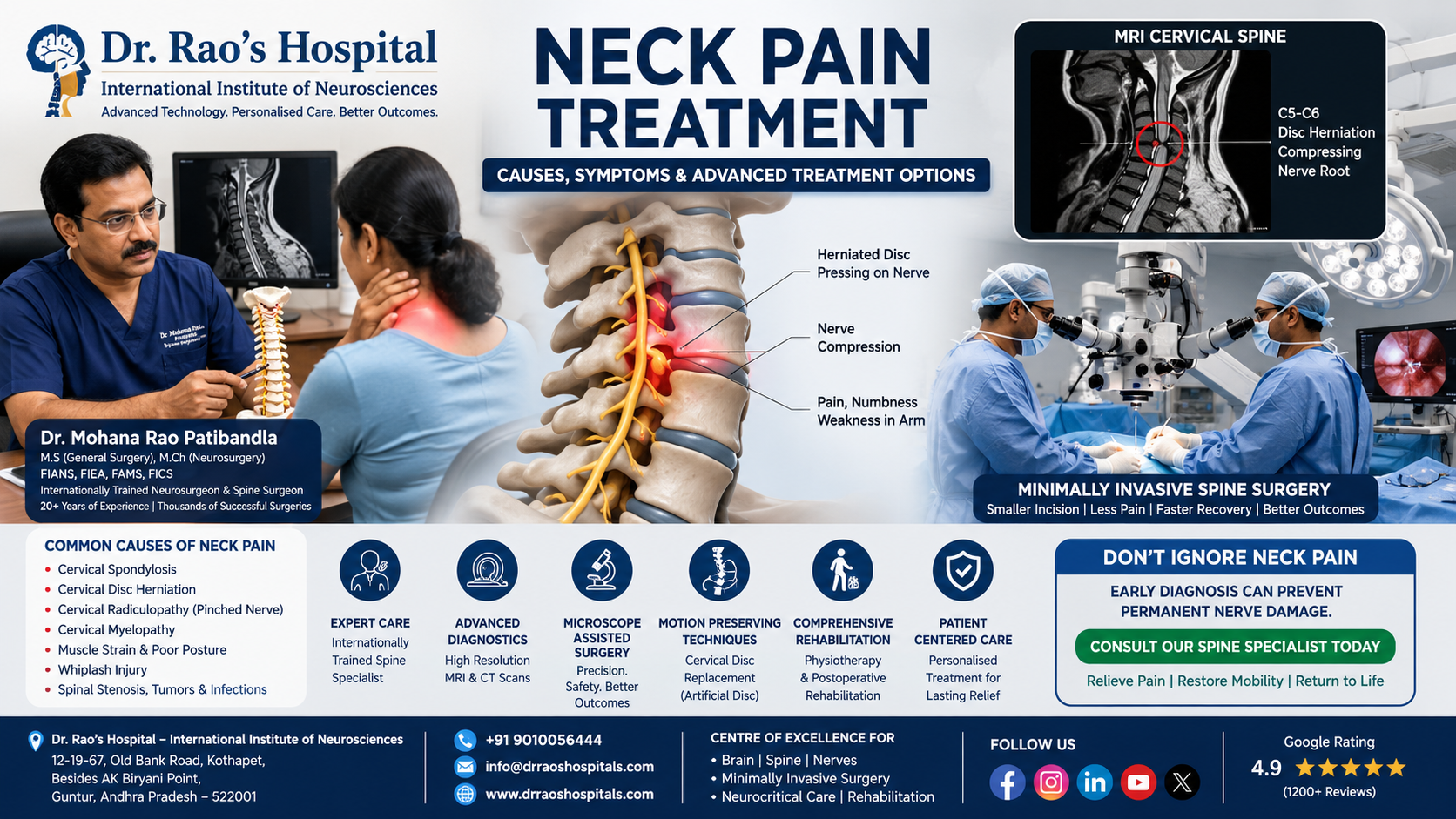
Early recognition of cervical spine disorders and timely evaluation help prevent permanent neurological damage, improve recovery, and preserve quality of life.
GUNTUR, ANDHRA PRADESH, INDIA, July 7, 2026 /EINPresswire.com/ — Persistent Neck Pain and Hand Weakness May Indicate Serious Spine Problems, Experts Explain
Early recognition of cervical spine disorders and timely specialist evaluation can help prevent permanent neurological damage, improve recovery, and preserve quality of life.
GUNTUR, Andhra Pradesh, India — Neck pain is one of the most common musculoskeletal complaints worldwide, but when accompanied by persistent hand weakness, numbness, poor balance, or difficulty with fine motor tasks, it may indicate a serious underlying cervical spine disorder requiring prompt medical evaluation. Spine specialists emphasize that these symptoms should not be dismissed as routine aging, muscle strain, or prolonged computer use.
The cervical spine, consisting of seven vertebrae in the neck, protects the spinal cord while supporting head movement. Degenerative changes, cervical disc herniation, spinal canal narrowing (cervical spinal stenosis), ligament thickening, trauma, infections, tumors, and other conditions can compress the spinal cord or nerve roots, leading to progressive neurological impairment if left untreated.
According to specialists at Dr. Rao’s Hospital – International Institute of Neurosciences (IIN), increasing awareness of warning signs is essential because many patients delay seeking medical attention until neurological deficits have become advanced.
“Persistent neck pain associated with weakness in the hands, numbness, loss of coordination, difficulty walking, or changes in balance should never be ignored,” said Dr. Mohana Rao Patibandla, Founder and Chief Neurosurgeon at Dr. Rao’s Hospital. “Many cervical spine conditions respond well to timely diagnosis and appropriate treatment. Early intervention often provides the best opportunity to preserve neurological function and improve long-term outcomes.”
When Neck Pain May Signal Something More Serious
While most episodes of neck pain are related to muscle strain or temporary inflammation, specialists advise immediate medical evaluation if symptoms include:
Progressive weakness in one or both hands
Numbness or tingling in the arms or fingers
Difficulty buttoning clothes or writing
Loss of grip strength
Problems with walking or maintaining balance
Electric shock-like sensations radiating down the spine or limbs
Persistent neck pain lasting several weeks despite conservative treatment
Loss of bowel or bladder control, which requires emergency evaluation
These symptoms may indicate cervical myelopathy, cervical radiculopathy, or spinal cord compression—conditions that can worsen over time if untreated.
Common Causes of Cervical Spine Disorders
Experts note that several conditions can contribute to spinal cord or nerve compression, including:
Cervical disc prolapse (herniated cervical disc)
Cervical spondylosis
Cervical spinal stenosis
Ossification of spinal ligaments
Degenerative disc disease
Traumatic cervical spine injuries
Spinal tumors
Congenital narrowing of the spinal canal
Inflammatory or infectious spinal disorders
Although age-related degeneration remains a common cause, younger individuals may also develop cervical spine disorders because of sports injuries, road traffic accidents, occupational strain, or congenital abnormalities.
Advances in Diagnosis Support Earlier Treatment
Modern imaging and neurological assessment allow clinicians to identify cervical spine disorders before permanent damage develops.
Diagnostic evaluation may include:
Detailed neurological examination
MRI of the cervical spine
CT scan when appropriate
Digital X-rays with dynamic views
Electrophysiological studies in selected patients
Comprehensive clinical assessment to determine spinal cord or nerve involvement
Accurate diagnosis enables physicians to distinguish cervical spine disease from shoulder disorders, peripheral neuropathy, stroke, or other neurological conditions that may produce similar symptoms.
Individualized Treatment Based on Disease Severity
Treatment depends on the underlying diagnosis, symptom severity, neurological findings, and imaging results.
For patients with mild disease, non-operative management may include:
Activity modification
Physiotherapy
Pain management
Targeted medications
Lifestyle modifications
Structured follow-up
However, progressive neurological weakness, spinal cord compression, worsening balance, or significant loss of function may require surgical intervention to decompress the spinal cord and stabilize the cervical spine.
Advances in spinal surgery now enable many patients to benefit from minimally invasive techniques where clinically appropriate, potentially reducing tissue disruption, postoperative discomfort, hospital stay, and recovery time while maintaining established surgical principles.
Technology Enhancing Precision in Spine Surgery
Modern cervical spine surgery increasingly incorporates advanced technologies that enhance surgical planning, precision, and patient safety.
These may include:
High-resolution neuronavigation
Intraoperative neuromonitoring
High-definition operating microscopes
Advanced endoscopic visualization
Minimally invasive spinal instrumentation
Comprehensive neurocritical care support
Such technologies assist surgeons in preserving critical neural structures while achieving effective decompression and stabilization in appropriately selected patients.
Prevention and Spine Health Awareness
Although not all cervical spine disorders are preventable, experts recommend several measures to support long-term spinal health:
Maintain proper workstation ergonomics
Avoid prolonged forward head posture
Exercise regularly
Strengthen neck and core muscles under professional guidance
Maintain a healthy body weight
Use appropriate protective equipment during sports
Seek evaluation for persistent neurological symptoms rather than relying solely on pain medications
Looking Beyond Pain
Healthcare professionals stress that the severity of spinal cord compression does not always correlate with pain intensity. Some patients develop significant neurological deficits despite experiencing only mild neck discomfort.
Recognizing early warning signs—including hand weakness, numbness, clumsiness, gait imbalance, and persistent neck pain—can facilitate earlier diagnosis, timely treatment, and improved functional outcomes.
As awareness grows regarding cervical spine disorders, specialists hope that more individuals will seek evaluation before permanent neurological injury occurs.
About Dr. Mohana Rao Patibandla
Dr. Mohana Rao Patibandla is a fellowship-trained neurosurgeon and the Founder and Chief Neurosurgeon of Dr. Rao’s Hospital – International Institute of Neurosciences (IIN), Guntur, India. He has received advanced subspecialty training in minimally invasive neurosurgery, skull base surgery, pediatric neurosurgery, cerebrovascular and endovascular neurosurgery, neuro-oncology, and stereotactic radiosurgery in India and the United States. Dr. Rao has performed more than 15,000 neurosurgical procedures, including over 12,000 minimally invasive surgeries and more than 3,000 endovascular interventions.
About Dr. Rao’s Hospital – International Institute of Neurosciences (IIN)
Dr. Rao’s Hospital – International Institute of Neurosciences (IIN), based in Guntur, Andhra Pradesh, is a comprehensive neuroscience center providing advanced care for disorders of the brain, spine, nerves, and cerebrovascular system. The hospital offers multidisciplinary services in neurosurgery, neurology, spine surgery, neuro-oncology, neurocritical care, rehabilitation, and minimally invasive surgical techniques. Equipped with advanced technologies including neuronavigation, intraoperative neuromonitoring, high-definition microscopy, endoscopy, and hybrid operating facilities, the institution is committed to evidence-based, patient-centered neurological care.
Media Contact
Dr. Rao’s Hospital – International Institute of Neurosciences (IIN)
12-19-67, Old Bank Road, Kothapet, Besides AK Biryani Point, Guntur, Andhra Pradesh, India
Phone: +91 9010056444
Email: info@drraoshospitals.com
Website: https://drraoshospitals.com
Mohana Rao Patibandla
Patibandla Narayana Swamy Neurosciences LLP
+91 90100 56444
info@drraoshospitals.com
Visit us on social media:
LinkedIn
Instagram
Facebook
YouTube
X
Best minimally invasive neurosurgery – Brain, Spine – Guntur – Dr. Rao’s IIN
Legal Disclaimer:
EIN Presswire provides this news content “as is” without warranty of any kind. We do not accept any responsibility or liability
for the accuracy, content, images, videos, licenses, completeness, legality, or reliability of the information contained in this
article. If you have any complaints or copyright issues related to this article, kindly contact the author above.

Media gallery