Transformers are advancing at a 13.5% CAGR, driven by rising voltage requirements of mega-container vessels and cruise ships.
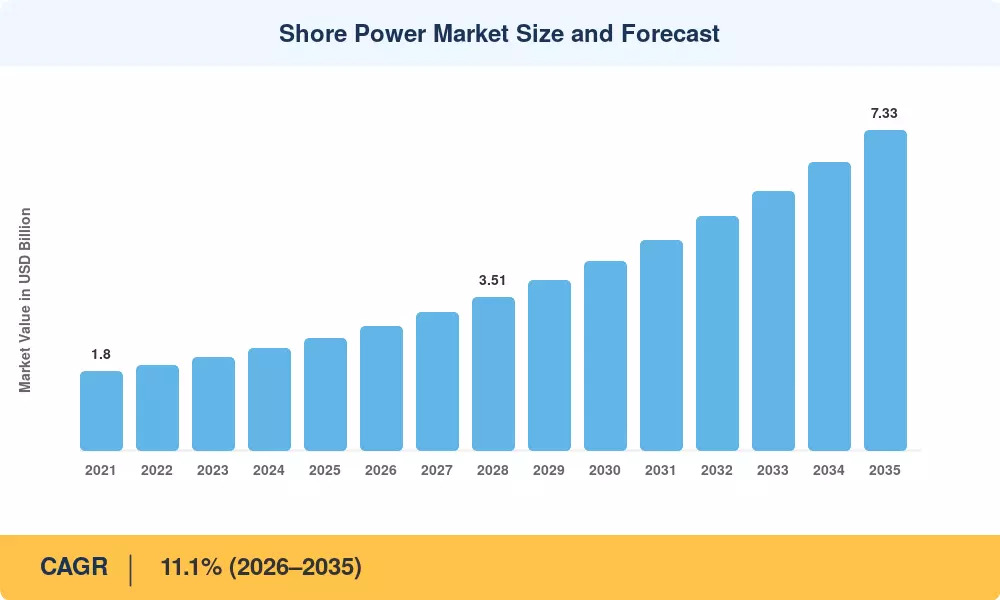
NEW YORK, NY, UNITED STATES, July 29, 2026 /EINPresswire.com/ — The Shore Power Market reached an estimated USD 2.56 Billion in 2025 and is projected to grow from USD 2.84 Billion in 2026 to USD 7.33 Billion by 2035, registering a CAGR of 11.1% during the forecast period (2026–2035).
Market Overview
Shore power Industry, also known as cold ironing or alternative maritime power (AMP), refers to the practice of providing electrical power from the shore grid to ships while they are docked at port, enabling vessels to shut down their auxiliary engines and reduce emissions during port stays. This technology involves a shore-side electrical supply system that connects to a ship’s onboard electrical network, providing power for essential operations such as lighting, heating, ventilation, refrigeration, cargo handling, and crew accommodations. Shore power infrastructure typically includes frequency converters, transformers, switchgear, cable management systems, and connection equipment designed to match the specific voltage and frequency requirements of different vessel types. The system enables ships to operate on cleaner electricity generated from the grid, which often includes renewable energy sources, significantly reducing local air pollution, greenhouse gas emissions, and noise pollution in port areas.
The shore power market is experiencing significant growth driven by several key factors. The increasing stringency of environmental regulations targeting maritime emissions is a primary growth driver. International, regional, and national regulations, including the International Maritime Organization’s (IMO) global sulfur cap and emissions control area (ECA) requirements, are compelling ports and ship operators to adopt cleaner technologies. The growing focus on reducing greenhouse gas emissions from shipping, aligned with global climate targets, is accelerating investments in shore power infrastructure. The need to improve local air quality in port cities and coastal communities, where ship emissions contribute significantly to air pollution, is driving port authorities to mandate shore power utilization.
Key industry trends shaping the shore power market include the increasing adoption of shore power mandates and incentives by port authorities and governments worldwide. The development of high-voltage shore connection (HVSC) systems enabling faster and more efficient connections for large vessels is gaining momentum. The integration of shore power with smart grid technologies and renewable energy sources is enhancing sustainability and operational flexibility. The growing focus on electrification of port operations, including container handling equipment and port vehicles, is creating synergies with shore power infrastructure.
The market is also benefiting from technological advancements in power conversion and connection systems. Innovations in frequency converters capable of matching different grid frequencies to various ship electrical systems are expanding application capabilities. The development of automated connection systems, including robotic cable handling and plug-in systems, is reducing connection times and improving operational efficiency. The integration of digital monitoring and control systems with real-time energy management capabilities is optimizing power delivery and reducing costs.
Policy and regulatory frameworks are playing a crucial role in shaping the shore power market landscape. The IMO’s strategy on reduction of greenhouse gas emissions from ships is driving consideration of shore power as an emission reduction measure. The European Union’s FuelEU Maritime regulation and the Alternative Fuels Infrastructure Regulation (AFIR) mandate shore power availability in certain ports. Many port authorities are implementing environmental policies requiring vessels to use shore power where available. Financial incentives, including grants, subsidies, and reduced port fees for vessels using shore power, are encouraging adoption.
Get Free Sample Report for Detailed Market Insights: https://www.marketresearchfuture.com/sample_request/8353
Market Segmentation
By Installation Type: The shore power market is segmented into shore-side equipment and ship-side equipment. Shore-side equipment represents the larger segment and includes power substations, frequency converters, transformers, switchgear, cable management systems, and connection points installed at the port. Ship-side equipment includes onboard electrical systems, connection panels, transformers, and controls required to receive shore power. The market for shore-side equipment is driven by port investments in infrastructure, while the ship-side segment is influenced by vessel retrofitting and newbuilding decisions.
By Connection Type: The market is categorized into plug-in connection systems and automated connection systems. Plug-in connection systems, including various cable connection methods, currently dominate the market due to their simplicity and widespread adoption. Automated connection systems, featuring robotic handling and automated cable management, are gaining traction in larger ports and high-traffic facilities seeking operational efficiency and reduced connection times. The trend toward automation reflects the increasing scale of shore power installations and the need for faster turnaround times.
By Frequency: The market is segmented into 50 Hz and 60 Hz systems, along with variable frequency systems. Frequency conversion is essential as ship electrical systems operate at different frequencies (typically 60 Hz for US-built ships and 50 Hz for European and Asian-built vessels). Frequency converters that can supply both frequencies or convert between them are critical components of shore power installations. Variable frequency systems offering flexible power delivery are gaining adoption in ports serving diverse vessel types.
By Power Rating: The market is categorized into low-power systems (below 1 MW), medium-power systems (1 MW to 10 MW), and high-power systems (above 10 MW). High-power systems dominate the market, driven by the power requirements of large vessels including container ships, cruise ships, and oil tankers. Medium-power systems serve medium-sized vessels such as ro-ro ships and ferries, while low-power systems are used for smaller vessels and auxiliary applications.
By Application: The market is segmented by vessel type into container ships, bulk carriers, tankers, cruise ships, ferries and ro-ro ships, offshore vessels, and naval vessels. Container ships represent the largest application segment, driven by the high volume of container port traffic and the significant emissions reduction potential. Cruise ships are a high-growth segment, driven by the environmental sensitivity of cruise destinations and passenger expectations for sustainability. Ferries and ro-ro ships are early adopters of shore power due to their frequent port calls and operation in coastal environments.
By Region: The market is analyzed across North America, Europe, Asia-Pacific, Latin America, and the Middle East and Africa. Europe is the largest regional market, driven by strong regulatory frameworks and environmental commitment. Asia-Pacific is the fastest-growing region, driven by expanding port infrastructure and increasing environmental awareness.
You can buy this market report at: https://www.marketresearchfuture.com/checkout?currency=one_user-USD&report_id=8353
Regional Analysis
North America: The North American shore power market is characterized by significant investments in port electrification and strong regulatory support. The United States leads the region, driven by the Environmental Protection Agency’s regulations on marine diesel engines and state-level initiatives in California and Washington. The Ports of Los Angeles, Long Beach, and Oakland have been pioneers in shore power adoption, driven by California’s stringent air quality regulations. Canada is developing its shore power capacity, with investments in major ports such as Vancouver and Halifax. The region’s focus on emissions reduction and port sustainability is driving continued market growth.
Europe: Europe is the largest regional market for shore power, driven by the European Union’s ambitious environmental policies and the commitment of European ports to sustainability. The EU’s Alternative Fuels Infrastructure Regulation and FuelEU Maritime regulation mandate shore power availability in certain ports, creating strong market drivers. Norway, Sweden, Germany, the Netherlands, and the United Kingdom are leading countries with extensive shore power infrastructure. The region’s strong focus on decarbonization, supported by public funding and collaborative initiatives, is accelerating market development. The North Sea and Baltic Sea ports, operating in emission control areas, have been early adopters of shore power.
Asia-Pacific: The Asia-Pacific region is the fastest-growing shore power market, driven by rapidly expanding port infrastructure, increasing environmental awareness, and growing regulatory pressure. China leads the region, with significant investments in shore power infrastructure at major ports including Shanghai, Shenzhen, and Ningbo-Zhoushan. The Chinese government has implemented policies requiring shore power availability at new and existing ports. Japan and South Korea are developing shore power capabilities, driven by environmental concerns and regulatory alignment with international standards. Singapore, one of the world’s busiest ports, is investing in shore power infrastructure. Southeast Asian countries including Malaysia, Thailand, and Vietnam are emerging markets with growing port development projects.
Latin America: The Latin American shore power market is in the early stages of development, presenting emerging opportunities. Brazil, Mexico, and Panama are key markets with potential for shore power development. The region’s expanding port infrastructure and growing focus on environmental sustainability are creating market opportunities. The Panama Canal expansion has increased traffic through the region, generating interest in environmental improvements at ports. Regulatory frameworks and financial constraints affect the pace of market development.
Middle East and Africa: The Middle East and Africa region presents limited but emerging shore power opportunities. The Middle East, particularly the UAE and Saudi Arabia, is investing in port infrastructure modernization and environmental improvements. The region’s focus on economic diversification and sustainability is driving consideration of shore power. Africa presents nascent opportunities, primarily in South Africa and North African ports. The region’s port development projects and growing environmental awareness will create future market potential.
Competitive Landscape / Key Players
The global shore power market is characterized by a mix of established power systems companies, marine electrical specialists, port equipment suppliers, and energy service providers. Key companies operating in the market include:
Siemens AG: A global leader in power systems and maritime technology, providing comprehensive shore power solutions including frequency converters, transformers, and connection systems. Siemens’ extensive experience in marine electrical systems supports its strong market position.
ABB Ltd.: A leading technology company offering shore power solutions including electrical equipment, automation systems, and connection technologies. ABB’s expertise in power conversion, marine systems, and digital solutions contributes to its market presence.
Wärtsilä Corporation: A global leader in marine equipment and solutions, providing shore power systems as part of its comprehensive port and vessel technology portfolio. Wärtsilä’s experience in marine electrical systems and ship design supports its market position.
Schneider Electric SE: A global leader in energy management and automation, providing shore power infrastructure solutions including electrical distribution, control systems, and connection equipment. Schneider Electric’s expertise in sustainable energy solutions contributes to its market presence.
Cavotec SA: A specialist in shore power connection systems, providing cable management systems, connection equipment, and automated shore power solutions. Cavotec’s focused expertise in shore connection technology supports its market position.
Other notable players include Danfoss A/S, ConWX ApS, Power Systems International, Inc., Jones EAI, and numerous regional engineering and construction firms. Strategic developments include technology partnerships, major project contracts, and expansion into emerging markets.
Latest Industry News & Developments
December 2025: Siemens Energy announced the completion of a major shore power installation at the Port of Rotterdam, featuring advanced frequency conversion technology capable of supplying 50 MW of power to multiple vessels simultaneously. The project represents Europe’s largest shore power installation and is expected to reduce port emissions by 50,000 tons annually.
November 2025: The California Air Resources Board approved regulations requiring all container, cruise, and refrigerated vessels at California ports to use shore power by 2030, representing the most ambitious shore power mandate in North America. The regulation is expected to drive significant investments in shore power infrastructure at California ports.
October 2025: ABB was awarded a contract to supply shore power systems to the Port of Singapore’s new container terminals, featuring automated connection technology and smart grid integration. The project is part of Singapore’s port sustainability initiative and is expected to be operational by 2028.
Market Challenges & Opportunities
Key Restraints: The shore power market faces several challenges that could impact its growth trajectory. The high capital costs associated with shore power infrastructure installation, including frequency converters, transformers, and connection systems, create significant investment barriers for port authorities. The technical complexity of integrating shore power systems with existing grid infrastructure and matching various ship electrical requirements requires specialized expertise. The significant power demands of large vessels can strain local grid capacity, requiring grid upgrades and coordination with utilities. The incompatibility of different vessel types and frequencies requires flexible systems, increasing costs. The long return on investment period and uncertain economic benefits, particularly when electricity prices are high compared to marine fuel costs, affect project financial viability. Additionally, the lack of international standards and harmonized technical requirements creates complexity for ports serving diverse vessel types.
Emerging Opportunities: The shore power market presents substantial opportunities in the global maritime decarbonization effort. The growing number of ports implementing shore power mandates and incentives creates a favorable market environment. The development of battery-electric ships and hybrid vessels that can utilize shore power for charging creates new applications and revenue opportunities. The integration of shore power with renewable energy sources and on-site power generation, including solar and wind, offers opportunities for sustainable and cost-effective power supply. The development of smart port solutions, integrating shore power with energy management systems, port digitalization, and grid flexibility services, offers value-added opportunities. The potential for shore power to support port microgrids and energy storage provides additional revenue streams.
Future Potential: The long-term potential of the shore power market is supported by the global commitment to maritime decarbonization and the increasing electrification of port operations. The adoption of international standards and harmonized technical requirements will facilitate market development and reduce costs. The growing fleet of shore power-capable vessels, driven by newbuilding designs and retrofitting, will expand the addressable market. The technological advancement in automated connection systems and high-power frequency conversion will improve operational efficiency and reduce costs. The essential role of shore power in achieving local air quality improvements and greenhouse gas emission reductions from shipping ensures sustained policy support and market growth throughout the forecast period.
To explore more market insights, visit us at: https://www.marketresearchfuture.com/reports/shore-power-market-8353
Final Market Summary
The global shore power market is poised for strong growth, with projections indicating an expansion from USD 2.84 billion in 2026 to USD 7.33 billion by 2035, at a compound annual growth rate of 11.1%. This robust growth trajectory is driven by stringent environmental regulations on maritime emissions, increasing port electrification initiatives, and the global commitment to decarbonizing the shipping industry. Europe emerges as the largest regional market, supported by ambitious regulatory frameworks and strong environmental commitment, while Asia-Pacific represents the fastest-growing region, driven by expanding port infrastructure and increasing environmental awareness. Technological advancements in frequency conversion, automated connection systems, and smart grid integration are enhancing system capabilities and operational efficiency. Despite challenges including high capital costs, technical complexity, and grid capacity constraints, the market offers substantial opportunities in port electrification, renewable integration, and smart port development. The essential role of shore power in improving local air quality in port cities and contributing to maritime emission reduction goals ensures sustained market momentum and long-term growth potential throughout the forecast period.
More Related Reports from MRFR Library:
Lead Acid Battery Market: https://www.marketresearchfuture.com/reports/lead-acid-battery-market-5055
Automated Industrial Door Market: https://www.marketresearchfuture.com/reports/automated-industrial-door-market-5143
Marine Hybrid Propulsion System Market: https://www.marketresearchfuture.com/reports/marine-hybrid-propulsion-system-market-5261
Digital Substation Market: https://www.marketresearchfuture.com/reports/digital-substation-market-5363
Dry Transformer Market: https://www.marketresearchfuture.com/reports/dry-transformer-market-5569
Virtual Power Plant Market: https://www.marketresearchfuture.com/reports/virtual-power-plant-market-5583
Metal Sawing Machine Market: https://www.marketresearchfuture.com/reports/metal-sawing-machine-market-5650
Larry Wilson
WantStats Research And Media Pvt. Ltd.
+1 855-661-4441
email us here
Visit us on social media:
LinkedIn
Facebook
YouTube
X
Legal Disclaimer:
EIN Presswire provides this news content “as is” without warranty of any kind. We do not accept any responsibility or liability
for the accuracy, content, images, videos, licenses, completeness, legality, or reliability of the information contained in this
article. If you have any complaints or copyright issues related to this article, kindly contact the author above.

Media gallery