
Key Takeaways
- Burst pipe water damage typically costs $1,500-$6,000 to restore and is usually covered under a standard NJ homeowners (HO-3) policy – sewage backups are not.
- Sewage backup cleanup in Monmouth County can run $15,000-$30,000+, far exceeding what most homeowners expect, especially in finished basements.
- The contamination category – clean water vs. black water – is the single biggest driver of both restoration cost and complexity.
- A water backup endorsement costs as little as $40-$150 per year, but its default $5,000 limit may leave a significant gap for serious losses – something worth understanding before the next storm season hits.
- PNE Construction LLC handles both types of water damage events across Monmouth County, with 24/7 emergency response and full insurance documentation support.
Two homeowners. Same neighborhood. Both call a restoration crew on the same winter morning. One gets a manageable bill and an insurance check. The other faces a five-figure out-of-pocket expense and a months-long rebuild. The difference? One had a burst pipe. The other had sewage backing up through the basement floor drain. Below is a clear breakdown of what separates these two events – in cost, process, and insurance coverage.
Same Basement, Two Very Different Bills
On the surface, both scenarios look similar: water where it should not be, damaged flooring, soggy drywall, a homeowner in crisis mode. The type of water, however, dictates everything. Clean water from a supply pipe follows a straightforward mitigation path. Sewage-contaminated water triggers a completely different set of protocols – stricter safety requirements, more demolition, heavier disposal costs, and a longer rebuild. That contamination gap is why two incidents affecting the same 400 square feet of basement can produce estimates that are $10,000 or more apart.
Burst Pipe Costs: What Monmouth Homeowners Actually Pay
Plumbing Repair Price Breakdown
Before restoration begins, the broken pipe has to be fixed. For most Monmouth County homes, that plumbing bill depends on where the failure occurs:
- Localized coupling repair: $200-$500
- Pipe repair requiring wall access: $400-$900
- Pipe rerouting along a new path: $600-$1,500
- Under-slab access repair: $800-$2,500
- Exterior water service line spot repair: $500-$1,200
- Full exterior water line replacement: $1,500-$5,000+
Trenchless methods can reduce total cost by avoiding major excavation and landscaping restoration, though accessibility still drives the final number.
Clean-Water Restoration Typically Runs $1,500-$6,000 in New Jersey
Once the plumber stops the leak, a certified restoration crew takes over. Monmouth County restoration firms – including PNE Construction LLC, which provides 24/7 emergency water extraction and full reconstruction services throughout the county – generally follow this workflow for clean-water losses:
- Emergency dispatch – crews respond rapidly, using truck-mounted extraction equipment and moisture meters to locate hidden water.
- Bulk extraction – standing water is removed from floors and basements.
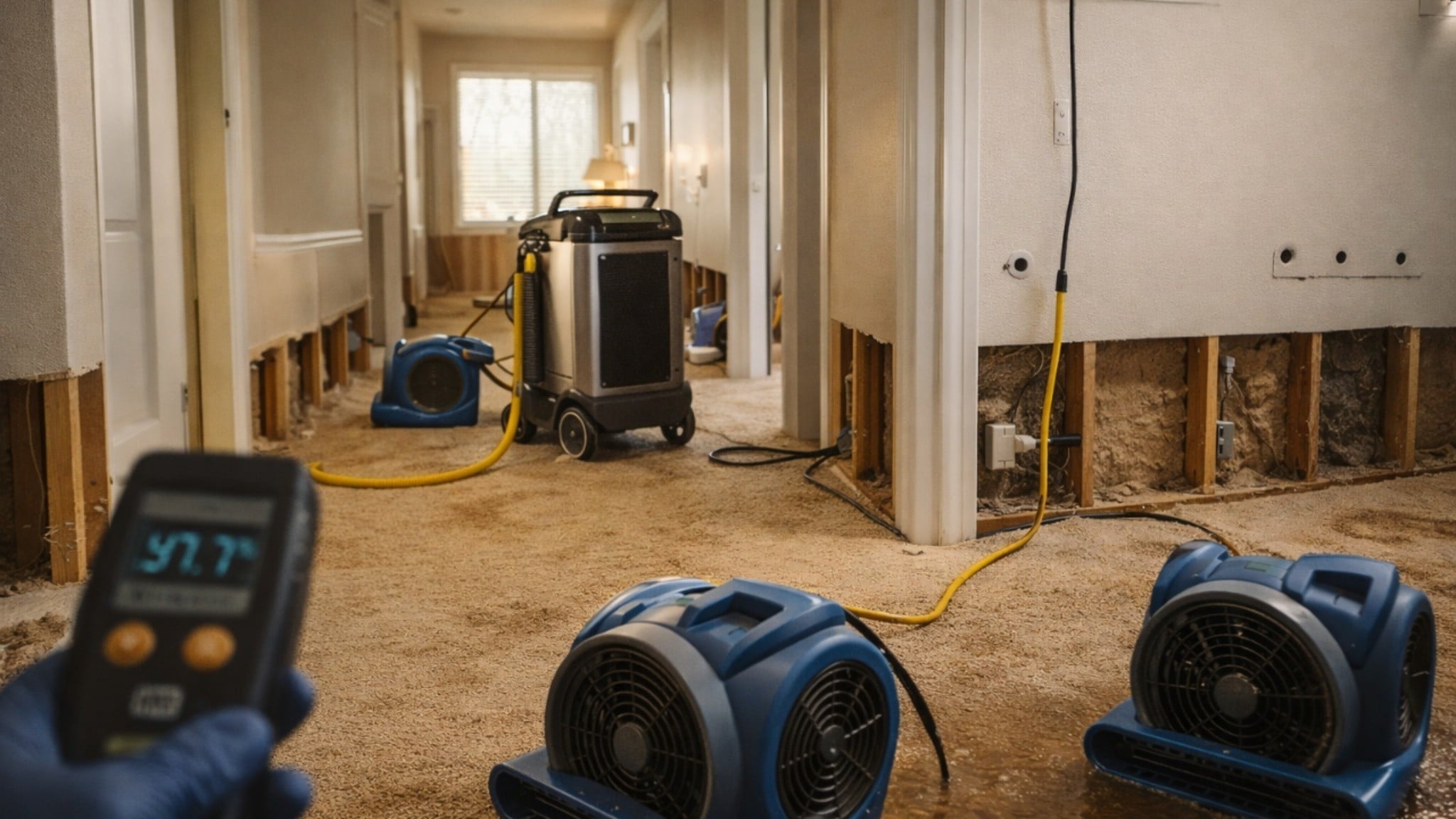
- Structural drying – industrial air movers and dehumidifiers run for 3-5 days, with daily moisture readings logged for insurance documentation.
- Antimicrobial treatment – applied within the first 24-48 hours to reduce mold risk.
- Selective demolition and rebuild – drywall, insulation, and flooring that cannot be dried in place are removed and replaced.
For a moderate burst-pipe loss, total restoration costs in NJ typically land in the $1,500-$6,000 range. More rooms, finished spaces, or any secondary mold issues can push that toward $15,000 in serious cases.
Sewage Backup Costs: Why the Bills Are Much Higher
Sewer Line Clearing vs. Full Replacement
A sewage backup starts with getting the line flowing again. A simple fixture clog might run as little as $63 for drain cleaning. A main sewer line clearing during business hours stays at the lower end of the market range – assuming easy cleanout access and a straightforward blockage. After-hours, weekend, or holiday calls carry emergency premiums that push costs higher.
The real exposure is structural failure. Collapsed clay or cast-iron sewer lines – common in older Monmouth County homes – can require major excavation and full replacement, with sewer work alone potentially reaching well into the thousands before any interior restoration begins. That is a separate bill from the cleanup.
Average Sewage Cleanup Runs $2,000-$10,000, Far More for Finished Basements
Interior sewage restoration is far more intensive than clean-water mitigation. Because sewage is classified as Category 3 (black water), the process involves:
- PPE and containment setup – technicians work in full protective gear; HVAC systems may be shut down to prevent cross-contamination.
- Removal of all porous materials – carpet, pad, drywall, insulation, and many contents are treated as non-salvageable and disposed of.
- EPA-registered disinfection – aggressive chemical treatment throughout the affected area.
- Structural drying and deodorization – often with HEPA air filtration running throughout.
- Extensive demolition and rebuild – far more material comes out compared to a clean-water event.
Because so much more is torn out and replaced, sewage backup jobs in Monmouth County frequently run $15,000-$30,000+ for serious losses involving finished basement spaces. That is the realistic range when contaminated water contacts multiple finished surfaces.
Category 1 vs. Category 3: The Contamination Gap
The Institute of Inspection, Cleaning and Restoration Certification (IICRC) classifies water damage into three categories based on contamination level, and that classification determines almost everything about the cleanup process.
Category 1 (Clean Water) – comes from a sanitary source like a supply line or overflowing sink. The primary risk is structural moisture and mold if drying is delayed. Standard extraction and drying equipment is sufficient.
Category 2 (Gray Water) – contains some contamination, such as a washing machine overflow or dishwasher leak. Requires professional handling but not the full hazardous-material protocol.
Category 3 (Black Water) – sewage backups, storm flooding, and standing water with biological growth fall here. This water contains pathogens and organic waste. Strict PPE, containment barriers, aggressive disinfection, and thorough material removal are all required.
That gap between Category 1 and Category 3 explains why two incidents covering the same square footage can produce estimates that are worlds apart. Water volume is only part of the equation – what is in the water matters just as much.
Insurance Coverage: Who Pays for What
Burst Pipes: Usually Covered Under Standard HO-3
NJ homeowners insurance guidance is consistent on this point: damage from a burst pipe is generally covered under a standard HO-3 policy because it qualifies as sudden and accidental. Structural repairs, drying costs, and damaged contents are covered – subject to the deductible and policy limits.
What is not covered: gradual leaks, long-term mold from deferred maintenance, and water that enters from outside such as storm surge, rising rivers, or surface flooding. A Monmouth homeowner with a typical burst-pipe loss can usually rely on their standard policy for the bulk of restoration costs.
Sewage Backups: Excluded Without a Water Backup Endorsement
This is where many homeowners get blindsided. Sewer and drain backups are explicitly excluded from most standard homeowners policies. Without a specific water backup endorsement – sometimes called a rider – the entire restoration bill lands out of pocket.
Adding this coverage typically costs $40-$150 per year – a modest annual expense that can offset tens of thousands in losses. The catch is what that endorsement actually covers.
The $5,000 Starting Limit – and Why Higher Coverage Is Often Worth It
Most water backup endorsements in NJ start with a default sublimit of around $5,000. The NJ Department of Banking and Insurance indicates that water backup coverage is typically listed as a separate line item with that cap. For a finished basement that costs $20,000+ to remediate and rebuild, a $5,000 sublimit covers only a fraction of the loss.
There is another layer many homeowners miss: the backup endorsement typically covers interior cleanup and restoration – but not the underground sewer pipe itself. Replacing a collapsed line requires a separate service line coverage endorsement. Without it, excavation and replacement costs are entirely out of pocket. Higher endorsement limits – often available up to $25,000-$50,000 depending on the carrier – cost modestly more per year and can make a significant difference when actual losses occur.
Monmouth County Risk Factors Homeowners Should Know
Monmouth County’s housing stock creates specific vulnerabilities worth understanding. Many shore and inland towns have older homes with clay or cast-iron sewer laterals that are susceptible to root intrusion and structural collapse – the exact failure modes that cause sewage backups. Low lots, high water tables near the coast, and the intensity of nor’easters and summer storm systems compound the risk considerably.
Finished basements are the biggest financial exposure. A burst pipe in a finished basement may be largely covered under standard homeowners insurance. That same finished basement hit by sewage backup could leave the homeowner capped at $5,000 – or completely uninsured if no rider was ever added.
Preventive steps that carry real weight locally include:
- Insulating exposed pipes before winter
- Annual or biannual main sewer line cleaning
- Installing a backflow prevention valve on the main line, a widely recommended measure for reducing sewage backup risk
- Reviewing the declarations page for water backup and service line coverage before storm season
Check Your Policy Before the Next Nor’easter – Then Call PNE Construction
The cost difference between a burst pipe and a sewage backup comes down to contamination level, demolition scope, insurance gaps, and how quickly the right crew responds. A clean-water burst handled fast stays manageable. A sewage backup in a finished basement without the right endorsement can turn into a financial emergency on top of a physical one.
Pulling out the declarations page and confirming water backup coverage – and the actual limit on that coverage – takes less than ten minutes. Doing it after the backup happens is too late.
For water damage emergencies across Monmouth County, PNE Construction LLC provides 24/7 response, IICRC-certified restoration, and complete insurance documentation support from extraction through final rebuild.
PNE Construction LLC
hello@pnepros.com
+1 888 827 6326
115 Oceanport Ave
Ste B
Little Silver
NJ
07739-1229
United States


