
Key Takeaways:
- Your car’s paint faces real chemical threats between washes – bird droppings and tree sap can begin etching your clear coat within days of contact.
- Most everyday drivers don’t need a full wash every week. A smart spot-treatment routine with the right products is often enough to maintain a clean, protected finish.
- Quick detailing only works streak-free when technique, towel quality, and surface condition all line up correctly – getting one wrong undoes the others.
- Household cleaners, dirty towels, and over-application are the three most common mistakes that quietly damage paint over time – and they’re all avoidable.
Keeping a car clean doesn’t start and end at the car wash. What happens between washes – the bird droppings left to sit, the dust wiped with the wrong cloth, the spray applied in the midday sun – can cause significant paint damage on its own. Neglecting regular washes is equally harmful, but improper between-wash care compounds that damage in ways most owners don’t anticipate. The good news is that protecting your paint between washes is entirely manageable, and it doesn’t require much time or a cabinet full of products.
Your Paint Is Under Attack Between Washes
Every time a car sits in a parking lot, travels a highway, or parks under a tree, it picks up a fresh round of contaminants. Dust, pollen, road film, bird droppings, and water minerals all settle onto the surface and begin interacting with the clear coat immediately. The clear coat – the invisible protective layer over your car’s color – is tougher than it looks, but it isn’t invincible.
The real problem is time. Most of these contaminants are harmless when fresh but become increasingly damaging the longer they sit. That window between washes is where paint protection is either maintained or quietly lost.
Why Most Cars Get It Wrong
The Neglect-vs-Overdoing Trap
There’s a common pattern among everyday car owners: either the car goes weeks without any attention, or the owner wipes it down constantly in an attempt to keep it spotless. Both extremes cause problems. Neglect lets contaminants bond to the paint. Overdoing it – frequent wiping, too much product, aggressive pressure – introduces micro-scratches and buildup that dull the finish over time.
When Wiping Makes Things Worse
Reaching for a cloth the moment a car looks dusty is a reflex most owners have. But wiping a surface covered in grit without proper lubrication drags those particles across the clear coat. Even a soft cloth can leave behind fine scratches under those conditions. If the surface isn’t properly lubricated – and the debris isn’t light enough to lift safely – a wipe-down does more harm than good.
What Actually Damages Paint Between Washes
Bird Droppings and Tree Sap: Act Fast
Bird droppings are one of the most underestimated paint threats. They contain uric acid, which is corrosive enough to begin etching into a car’s clear coat in as little as a few days – faster in hot weather. Tree sap behaves similarly, hardening over time and becoming increasingly difficult to remove without aggressive treatment that risks scratching.
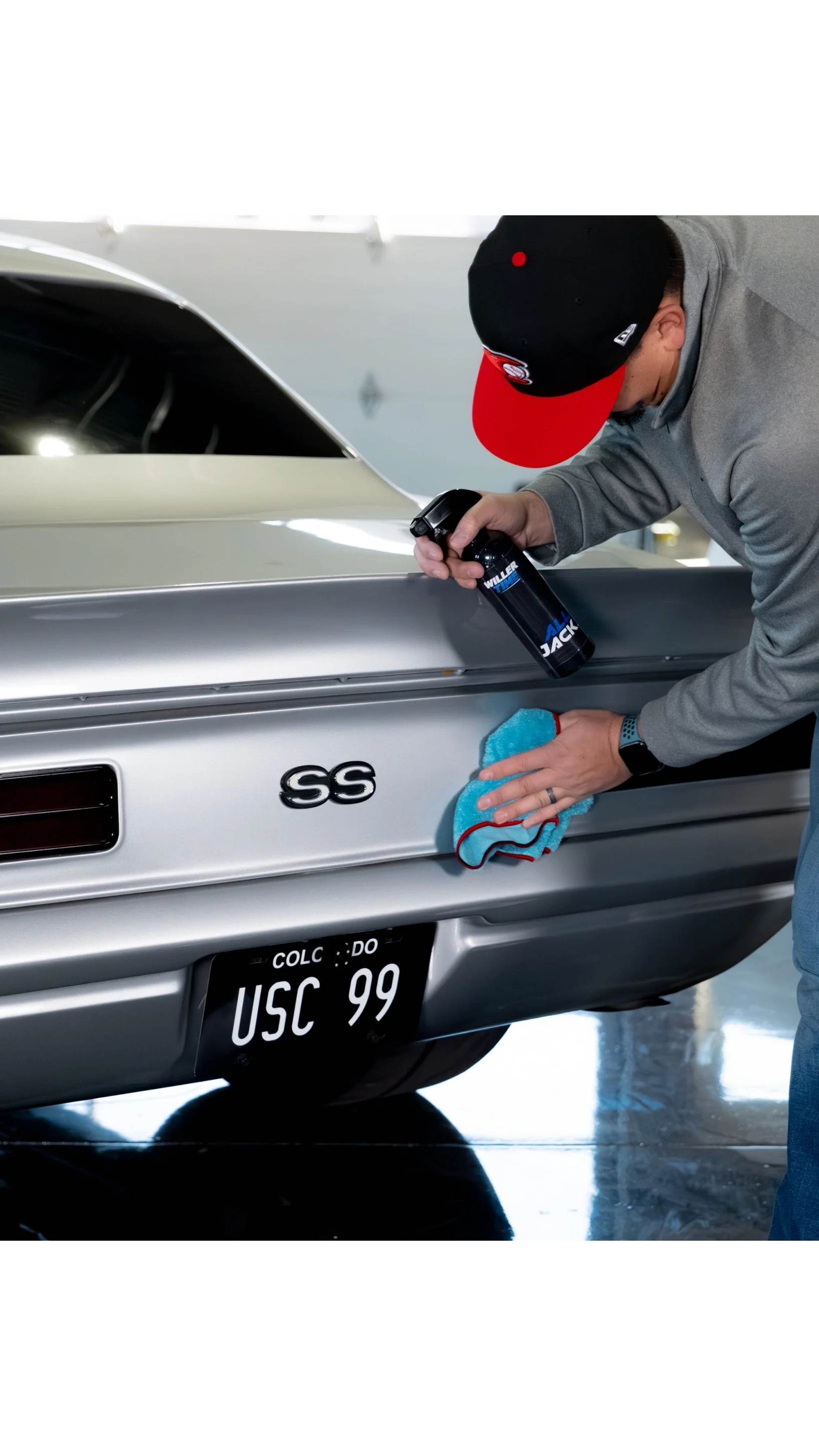
Both need to be addressed quickly. A targeted spot treatment using a proper detail spray and a clean microfiber towel is usually enough to remove fresh contamination safely, without waiting for the next full wash.
Water Spots and Direct Sunlight
Water spots form when water evaporates and leaves behind dissolved minerals on the paint surface. They’re common after rain, sprinklers, or even a rinse that wasn’t dried properly. Left untreated, those mineral deposits etch into the clear coat just like acid would.
Direct sunlight speeds everything up. Quick detailing or any kind of spray application on a hot surface causes the product to flash-dry before it can be worked in properly, leaving streaks and residue behind. Working in the shade, on a cool panel, isn’t optional – it’s the difference between a clean finish and a frustrating one.
The Right Between-Wash Routine
Weekly Visual Check, Not a Full Wash
A weekly visual inspection takes about two minutes and catches problems before they become permanent. Walk around the car and look for fresh bird droppings, water spots, sap, or any new contamination. This isn’t about washing – it’s about knowing what’s on the surface so the right response can be applied.
Most daily drivers benefit from a full wash every two to three weeks, depending on where and how much the car is driven. Between those washes, the goal is preservation, not transformation.
Spot-Treat, Don’t Wipe Everything
When something specific is found – a bird dropping on the hood, a water spot on the trunk – treat that area, not the whole car. Whole-car wipe-downs between washes are unnecessary for light contamination and increase the chance of introducing scratches. Targeted treatment is faster, safer, and more effective.
The key is acting while the contamination is still fresh. Once bird droppings or sap harden, they require more force to remove – force that always carries some risk to the paint surface.
How to Quick Detail Without Streaks
Surface, Technique, and Towel Discipline
Streak-free quick detailing comes down to three things working together: the right surface conditions, proper technique, and clean, high-quality towels.
Surface conditions matter more than most people realize. Always work on a cool panel, out of direct sunlight. A surface that’s warm to the touch will cause the product to dry before it can be properly wiped away.
Technique is where most people cut corners. The right process looks like this:
- Fold a clean microfiber towel into quarters to give multiple clean wiping surfaces.
- Apply a light mist of detail spray directly to the panel – not a heavy soak.
- Wipe in straight, overlapping passes rather than circles. Circular motions trap particles and create swirl marks.
- Flip or rotate to a clean section of the towel frequently.
- Follow with a second, dry pass if any haze or streaking remains.
Towel quality is the piece most people underinvest in. High-quality microfiber towels lift and trap particles rather than dragging them across the surface. Their ultra-soft texture prevents scratches, and they absorb significantly more liquid than cotton alternatives, making them far more effective for both application and removal.
Mistakes That Undo Your Effort
Household Products Strip Your Clear Coat
Dish soap is probably the most common paint-damaging mistake in at-home car care. Designed to cut grease aggressively, it does exactly that on a car’s surface – stripping wax, degrading sealants, and leaving the clear coat unprotected. The same goes for general-purpose household sprays and glass cleaners used on painted panels.
Automotive-specific products are formulated with pH-balanced chemistry that cleans effectively without compromising the protective layers underneath. The difference in outcome – especially over months of repeated use – is significant.
Dirty Towels and Over-Application
A contaminated towel defeats the entire point of careful technique. Dirt embedded in a towel from a previous session gets dragged back across the paint, creating the micro-scratches that accumulate into the dull, hazy finish many car owners assume is just aging paint.
Over-application causes its own problems. More product doesn’t mean more protection – it means more residue to wipe away, more friction on the surface, and a higher chance of streaking. Thin, controlled application preserves a clean, streak-free finish and reduces unnecessary friction. Use less than feels necessary. The results will be better for it.
Streak-Free Maintenance, Done Right.
Between-wash maintenance doesn’t require a full detailing session every time. Inspect weekly. Spot-treat fast when contamination shows up. Work on cool surfaces, use clean microfiber towels, and apply product sparingly. Skip the household cleaners entirely.
Done consistently, this kind of routine keeps paint protected longer, reduces the need for correction work, and preserves clear coat thickness over time – which directly affects how a car looks years down the road. The cars that age well aren’t necessarily washed more often. They’re maintained more thoughtfully.
Willer Time
support@willertime.com
1(800) 555-1234
2020 N Academy Blvd Ste 261
#4504
Colorado Springs
CO
80909
United States


