
Key Takeaways
- White webbing on tree trunks in Houston is usually the work of bark lice, and there is a good chance the tree underneath is doing just fine.
- Bark lice never bore into wood or feed on living bark, so the webbing they leave behind is not a sign of decay.
- A sudden bark lice boom can sometimes point to bigger issues like drought stress or poor air circulation, so it helps to know the warning signs beyond the webbing.
- Fall webworms and bark lice both spin silk on trees, but they behave very differently and call for different responses.
- An ISA Certified Arborist such as Tree Care, Inc. should get a look if webbing shows up alongside thinning leaves or dieback, since that combination points to something bark lice did not cause.
Waking up to a tree trunk wrapped in ghostly white silk can send any homeowner straight into panic mode. Before reaching for pesticide or picking up the phone in a rush, it helps to know what is actually happening on that bark. In the vast majority of cases, this eerie sight has a simple, harmless explanation rooted in a tiny insect most people have never heard of.
The Ghost Web Mystery Explained
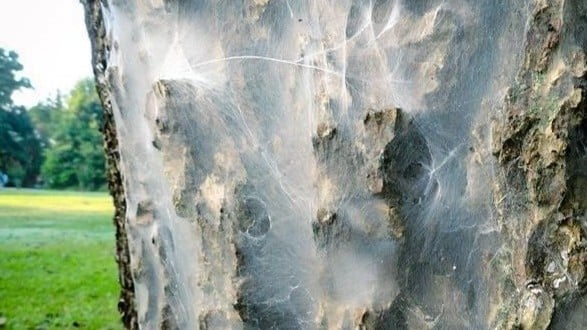
Late summer in the Greater Houston area tends to bring a strange visitor to backyard oaks and pecans: a thin, silky sheet of white webbing that seems to appear overnight. Homeowners sometimes describe it as looking like a tree got decorated for Halloween a few weeks early, and the comparison is not far off. This phenomenon has earned the nickname “Ghost Web” because of how suddenly it shows up and how mysteriously it vanishes.
The webbing usually clings to the trunk and larger limbs rather than the leaves, which is the first clue that something other than a typical caterpillar is at work. It looks alarming because it covers so much surface area so fast, but appearances can be deceiving here. A closer look at the culprit behind the silk explains why the sight, while dramatic, rarely calls for alarm.
For a deeper breakdown of this exact question, Tree Care’s guide on white webbing walks through what is really going on beneath that silky layer.
Meet the Bark Lice
What They Look Like
Bark lice, sometimes called Psocids, are small, soft-bodied insects that measure less than a quarter-inch long. They have long, thin antennae, and some species carry wings that rest over their bodies in a tent-like shape. Colonies tend to cluster together on the bark, which can make them look a bit like aphids at first glance, though their behavior and impact on the tree are completely different. Bark lice belong to the order Psocoptera, a group that includes more than 300 species found across the United States and Canada, and one species in particular, Archipsocus nomas, is well known for spinning the kind of extensive silk sheets that catch a homeowner’s eye.
Why They Spin the Webbing
The silk is not a trap for prey or a nest for eggs in the way many people assume. It functions more like a tent, shielding the colony from predators and from harsh weather while the insects go about their business on the bark surface. This protective layer is thin and fragile by design, and it typically breaks down or gets consumed by the bark lice themselves within a matter of weeks. Once the food source underneath runs out, the colony moves on and the webbing disappears just as quickly as it arrived, often leaving behind a trunk that looks completely normal again.
Why Bark Lice Are Beneficial
Rather than damaging a tree, bark lice spend their time feeding on algae, fungi, lichen, dead bark, and other organic debris clinging to the trunk. They act as a small cleaning crew that scrubs the bark surface without ever touching living tissue underneath. Because they thrive on the kind of moisture and organic buildup found in a healthy, balanced environment, their presence can actually be a sign that the surrounding ecosystem is functioning well.
Despite the unsettling name, bark lice share nothing in common with the parasitic lice associated with humans or animals. They pose no threat to people, pets, or the tree itself, and treating them as pests overlooks the useful job they are doing. A yard hosting a colony of bark lice often has plenty of natural moisture and organic activity, which is generally a good sign rather than a bad one.
Bark Lice vs. Fall Webworms
Houston homeowners often confuse bark lice with fall webworms, since both show up around the same time of year and both spin silk. Telling them apart matters, because the right response for one is completely wrong for the other.
- Bark lice build thin, sheet-like webbing directly on the trunk and larger limbs, and they feed exclusively on surface debris like algae and lichen rather than on the tree itself.
- Fall webworms are caterpillars that construct thicker, tent-like webs at the tips of branches, and they feed on the leaves trapped inside those webs, which can lead to some defoliation.
Fall webworm damage rarely kills a tree outright, but heavy feeding can leave branches looking thin and patchy for a season. Bark lice, by contrast, leave the leaves completely untouched since their diet is limited to what is growing on the bark surface. Recognizing which insect is responsible saves homeowners from treating a beneficial visitor like a threat, or ignoring an infestation that might actually warrant a bit of pruning.
When Webbing Signals Tree Stress
Conditions That Attract Bark Lice
Bark lice tend to show up in force when the environment favors their food supply. Extended periods of high humidity encourage the growth of algae and fungi on bark, which in turn gives bark lice plenty to feed on and can trigger a noticeable population boom. This pattern is common across the southeastern United States, including the Galveston-Houston region, particularly as summer stretches into fall.
A sudden spike in bark lice activity is not something the insects themselves cause, but it can be worth a second look at the tree’s overall situation. Conditions that tend to accompany a larger-than-usual colony include:
- Drought stress that weakens a tree’s natural defenses
- Soil compaction that limits root access to air and water
- Reduced air circulation around the trunk and canopy
- Excessive moisture or humidity that fuels fungal growth
- General tree stress from a combination of factors
Warning Signs Beyond the Webbing
The webbing itself is never the problem, but it can serve as a nudge to check the tree over more carefully. Foliage that looks thin, discolored, or is dropping out of season is one sign worth paying attention to. Dieback in the upper canopy or dead limbs scattered through the crown are further red flags that point to something happening below the surface, unrelated to the bark lice themselves. When these symptoms show up alongside the webbing, the smart move is treating them as separate issues that deserve their own investigation rather than assuming the insects are to blame.
How to Respond Responsibly
Skip the Pesticides
Reaching for a spray bottle is one of the most common mistakes homeowners make when they spot bark lice. Since these insects are not eating the tree, boring into the wood, or spreading disease, there is nothing for a pesticide to actually treat. Spraying chemicals in this situation risks wiping out beneficial organisms in the surrounding ecosystem, which can do more harm than the webbing ever could. If the webbing itself feels unsightly, a strong stream of water from a garden hose or a gentle sweep with a broom is usually enough to knock it down.
Support Overall Tree Health
Since bark lice numbers often track back to environmental conditions, the best long-term response is caring for the tree as a whole rather than chasing the insects directly. A few habits go a long way:
- Water deeply during dry stretches rather than giving frequent shallow sprinklings, which encourages stronger root growth.
- Maintain healthy soil with a proper layer of mulch around the base, avoiding piling it directly against the trunk.
- Consider deep root fertilization for trees already showing signs of stress, since it delivers nutrients closer to where roots can use them.
These steps address the underlying conditions that sometimes draw larger bark lice colonies in the first place, while also keeping the tree resilient against other seasonal pressures.
Know When to Call an Arborist
Bark lice alone are never a reason to call in professional help. The situation changes, though, once webbing appears alongside declining foliage, branch dieback, or other signs the tree is struggling. An ISA Certified Arborist can evaluate whether an underlying issue such as drought stress or soil compaction needs attention, and routine tree inspections can catch potential stress factors before they turn into bigger problems. Getting a professional opinion at that point separates a cosmetic curiosity from a genuine concern worth addressing.
Nature’s Cleaning Crew Deserves a Pass
That silky white coating wrapped around a tree trunk looks unsettling, but it usually tells a story about a small insect doing quiet, useful work. Bark lice clean up algae, fungi, and lichen without ever touching healthy bark, and the “Ghost Web” they leave behind fades away on its own within a few weeks. The real task for homeowners is watching for the handful of stress signals, like thinning leaves or dieback, that point to something other than these harmless helpers.
For homeowners who want peace of mind about what is happening on their own trees, scheduling a look at white webbing on a tree trunk is a simple way to tell the difference between nature doing its job and a tree that needs real attention.
Tree Care, Inc.
1 713-850-8466
106 South Market Street
Brenham
Texas
77833
United States


